If Alaska looks like one big cold landscape from the highway map, the state is about to correct the record.
When people ask what makes Alaska ecologically special, they usually mean some version of three questions: What grows there? What lives there? And how does life keep going in a place where winter likes to linger and summer refuses to waste time? A good plain-language starting point is the EPA’s overview of wetlands and the USGS Alaska Science Center’s work on climate change in Alaska, because both show how living systems can look fragile and still do a remarkable amount of work.
Alaska’s ecosystems matter because they hold water, store carbon, shelter wildlife, and set the pace for migration, breeding, and plant growth. Climate change is nudging that pace. That does not mean the landscape is collapsing every Tuesday; it means the timing of freeze, thaw, snow cover, and vegetation growth is changing in ways that ripple through the food web. The question is not whether Alaska changes. It always has. The question is how fast the change arrives and how well each ecosystem can adapt.
In this guide, I will walk through the main ecosystem types, explain what makes each one distinct, and show how conservation work tries to keep the whole system in balance. If you want more Alaska reading after this, the blog gathers related articles, and the services page is the practical place to start if you are planning a trip and want help making the details less slippery.
Table of contents
- Terms and the big picture
- A visual snapshot of Alaska’s habitats
- Tundra: the low, windy roof of Alaska
- Forests: boreal interior and temperate coast
- Wetlands: Alaska’s quiet water infrastructure
- Climate change: small shifts, big effects
- Conservation: what protection looks like on the ground
- What visitors can do
- Conclusion
Terms and the big picture
Before the rest of the article gets too comfortable, here is a quick translation of the words that show up again and again. I like a tidy definition table because it keeps the rest of the conversation from wobbling around in the snow.
| Term | Plain-language meaning | Why it matters in Alaska |
|---|---|---|
| Tundra | Open country with cold temperatures, short growing seasons, and low plants such as mosses, lichens, sedges, and small shrubs. | It covers huge stretches of northern and alpine Alaska and supports nesting birds, caribou, insects, and seasonal bloom cycles. |
| Boreal forest or taiga | Cold northern forest dominated by spruce, birch, aspen, and wet soils in many places. | It forms the broad interior green belt of Alaska and provides cover, food, and migration corridors for wildlife. |
| Temperate rainforest | Cool, wet coastal forest with towering trees, deep moss, and very patient ferns. | It shapes Southeast Alaska, where rain, fog, and salt air create a very different habitat from the interior. |
| Wetland | Land that stays wet for long periods, including marshes, bogs, fens, and shallow floodplain habitat. | Wetlands filter water, reduce flooding, and act as nurseries for birds, fish, and amphibians. |
| Permafrost | Ground that stays frozen for at least two consecutive years. | It shapes drainage, plant growth, building stability, and the way water moves across the land. |
| Biodiversity | The variety of life in a place, from plants and insects to large mammals and migratory birds. | High biodiversity helps an ecosystem absorb stress and recover after disturbance. |
Now for the larger pattern. Alaska is not one ecosystem with a few side notes. It is a ladder of climate zones and habitat types. The farther you travel, the more the land changes character. Move north and the trees thin out. Move inland and the weather grows more continental. Move toward the coast and moisture takes over, turning the landscape greener, softer, and in some places gloriously moss-covered. That kind of variety is why Alaska can support such a long list of species and why a single season can look completely different from one region to the next.

Tundra |
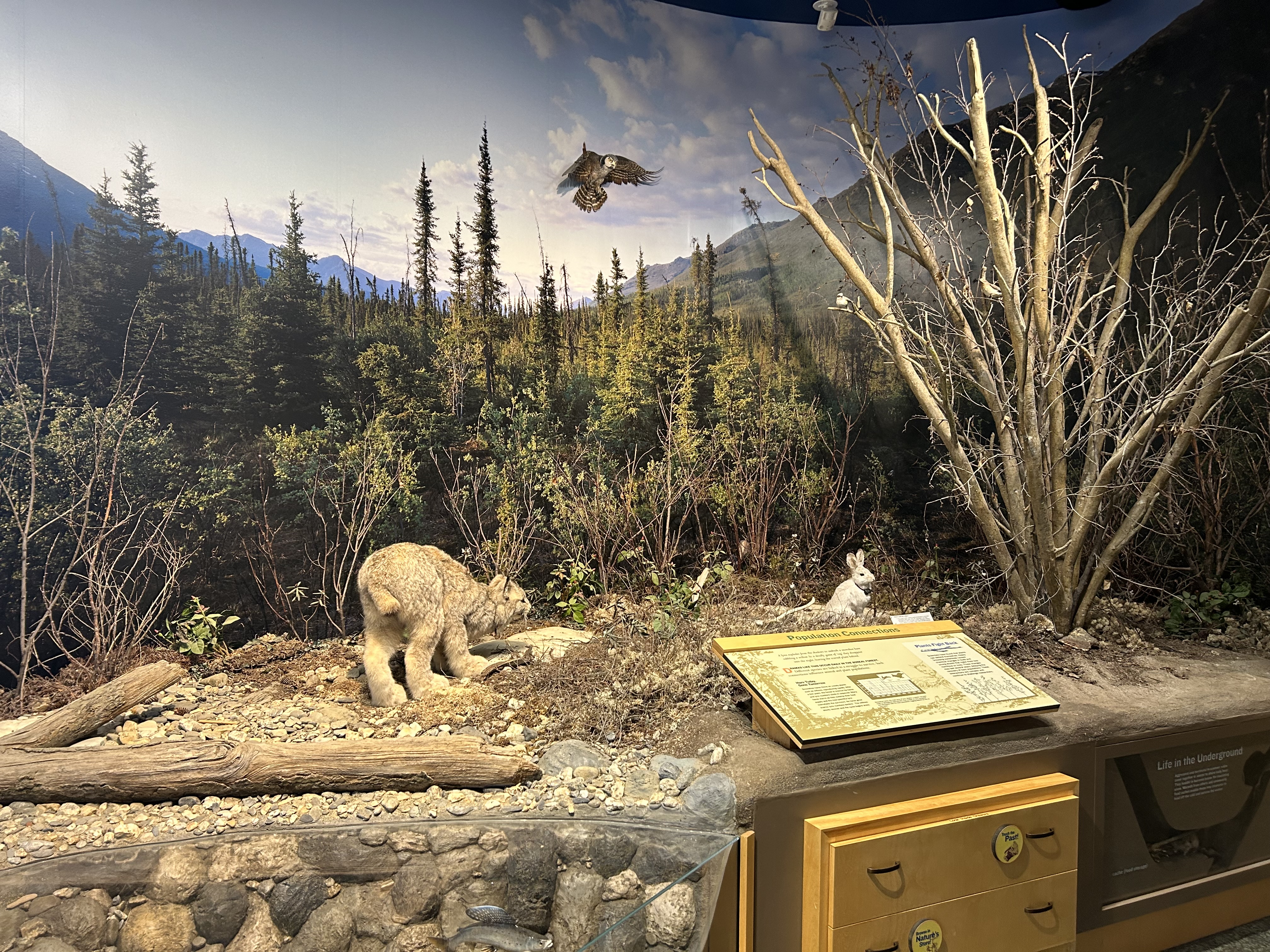
Boreal forest |
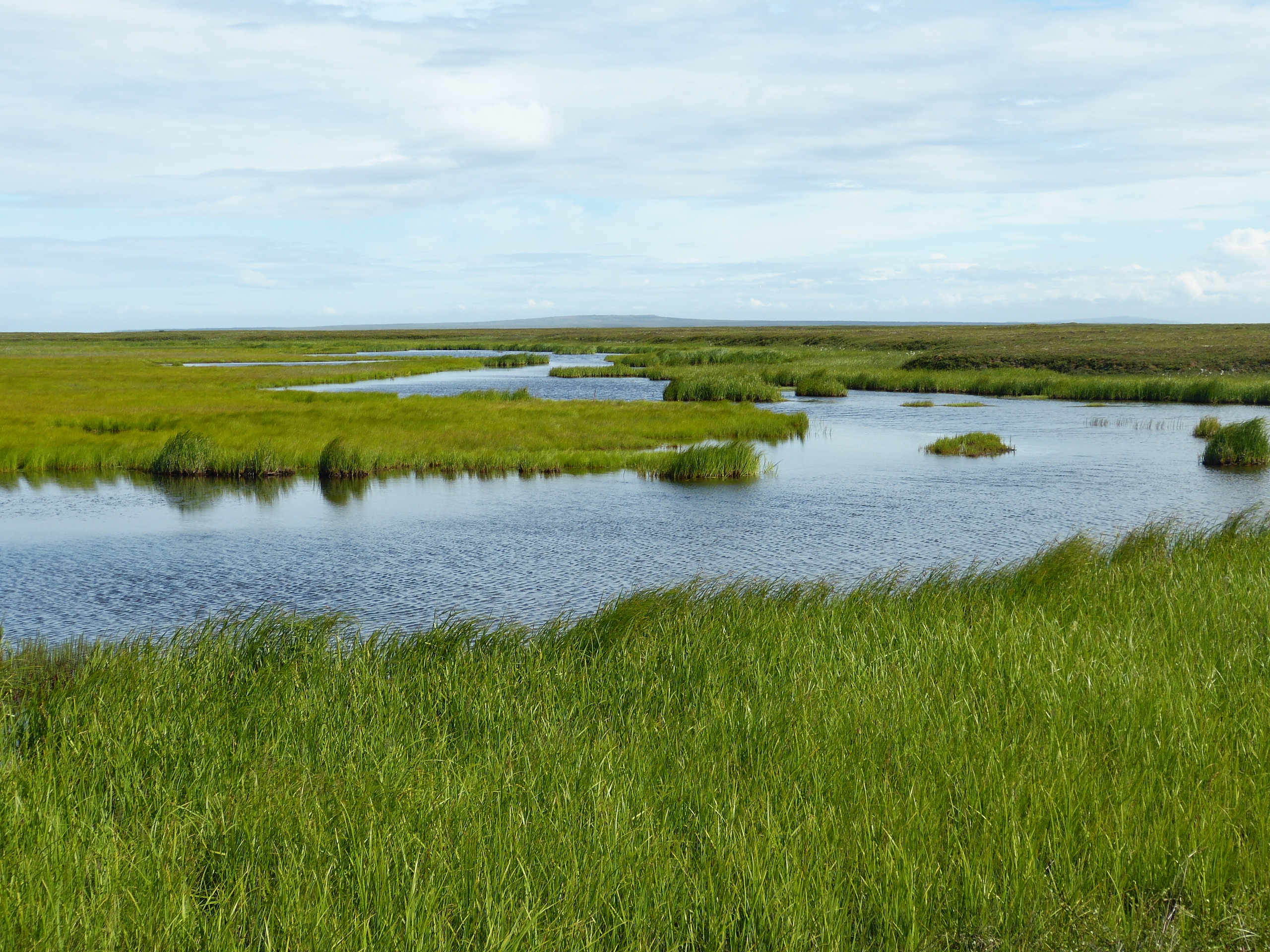
Wetland |
Tundra: the low, windy roof of Alaska
Tundra is often described as bare ground, but that description is too easy and not very fair. The tundra is not empty. It is compressed. Life stays low because the growing season is short, the wind is relentless, and the soil may sit on top of permafrost. Mosses, lichens, dwarf shrubs, sedges, and grasses do not grow there because they are stubborn in a dramatic way. They grow there because they are well suited to the job.
In practical terms, tundra is the kind of place where every extra day of warmth matters. Snow melts later or earlier, flowers open in a tight schedule, and insects appear just when birds need them most. That is why tundra ecology is often about timing more than size. Caribou, Arctic foxes, ptarmigan, and many migratory birds depend on that timing working out. If you want a general reference on the frozen ground beneath the habitat, the National Snow and Ice Data Center’s primer on permafrost helps explain why tundra behaves the way it does.
The important takeaway is that tundra is living ground, not a blank page. It holds moisture, supports nesting, and helps regulate local heat and water flow. When the surface warms, even a little, the changes can spread through the system quickly. Shrubs can expand into open areas, snow patterns can shift, and thawing ground can change drainage. None of that makes the tundra less interesting. It makes it more delicate, which is a useful distinction.
- Common plants: mosses, lichens, sedges, dwarf birch, willow, berry plants.
- Common animals: caribou, Arctic fox, wolves, ptarmigan, snow buntings, migratory shorebirds.
- Main ecological job: provide breeding habitat, seasonal forage, and a surface that stores water and carbon.
- Climate pressure: warming, permafrost thaw, shrub expansion, and changes in snow cover.
One easy way to picture tundra is to imagine a carpet laid over frozen ground. That carpet may be thin, but it is doing real work. It is not decorative. It is infrastructure with leaves on it.
Forests: boreal interior and temperate coast
Alaska’s forests deserve a section of their own because they are not one uniform green mass. The interior is mostly boreal forest, while the southeast coast bends toward temperate rainforest conditions. Both are forests. They are not the same forest, and the difference matters.
Boreal forest: spruce, muskeg, and long winters
The boreal forest, sometimes called taiga, covers a huge swath of interior Alaska. Black spruce is the classic tree here, often joined by white spruce, birch, aspen, alder, and willow. The ground can be dry on a ridge and soggy in a low spot, sometimes in the same short walk. Muskeg, peat, and frozen soil create a landscape that feels a bit like it was designed by a committee that could not agree on drainage. That is not a complaint. It is part of the charm.
For a practical public-facing example of how the boreal forest is interpreted for visitors, the Arctic Interagency Visitor Center is a useful stop. It reminds readers that ecosystem education does not have to be abstract. It can be plain, visual, and grounded in local land management.
The boreal forest is important because it feeds wildlife and connects habitats. Moose browse here. Lynx and wolves move through it. Songbirds nest in the understory. Berries, fungi, and insects keep the system busy long after the snow melts. In many places, fire also plays a role. That sounds alarming until you remember that fire is one of the ways boreal forest renews itself. The trick is not to eliminate fire altogether. The trick is to understand when it belongs and when it has become too frequent or too intense for the system to recover well.
Temperate rainforest: the wet, mossy southeast
Southeast Alaska shifts into another world entirely. Rain is more common, temperatures are more moderate, and the forest can look as if it has been taking a long drink for several centuries. Sitka spruce and western hemlock are the stars in many places, with dense moss, fern layers, and thick understory growth that can make the forest feel almost upholstered. If the boreal forest feels sparse in places, the temperate rainforest feels like it has never heard of the word sparse.
This forest type matters because it connects land and sea. Salmon streams, estuaries, and coastal forests exchange nutrients. Bears, eagles, insects, and decomposing wood all participate in the same larger nutrient cycle. A fallen log is not just a log. It is a future home for fungi, moss, insects, and seedlings. Nature does not waste much in a healthy rainforest.
The practical lesson is that forest health is about structure, not just tree count. A forest with old trees, young trees, dead wood, moss, and clean water usually does more ecological work than a simplified stand of one age class. It offers shade, shelter, food, and room for different life stages. That is one reason forestry, habitat protection, and watershed management are so closely tied together.
- Boreal forest clues: black spruce, lichens, boggy ground, broad river valleys, long winter shadows.
- Temperate rainforest clues: heavy moss, big conifers, fog, salmon streams, and a level of dampness that should probably qualify for a medal.
- Why forests matter: they hold wildlife, stabilize soil, and keep water moving in ways that support downstream habitat.
Wetlands: Alaska’s quiet water infrastructure
Wetlands rarely get the loudest praise, which is odd because they are some of the hardest-working places in the landscape. A wetland may look like shallow water, soggy grass, peat, or a floodplain with a strong opinion. Underneath that unglamorous surface, though, wetlands filter water, slow runoff, store nutrients, and offer critical habitat for birds and fish. They are the landscape’s quiet infrastructure team. The U.S. Fish & Wildlife Service’s wetlands program gives another plain-language look at why these places matter so much to birds, fish, and water quality: wetlands conservation and habitat support.
Alaska has many kinds of wetlands: marshes, bogs, fens, swampy edges, river deltas, coastal flats, and shallow ponds that come and go with the seasons. Some are fed by snowmelt. Some are fed by groundwater. Some sit near the coast and mix fresh and salt water in messy but productive ways. The common thread is moisture. The EPA’s wetlands overview is a straightforward reminder that these places do not just store water; they shape it.
Wetlands are especially important for migratory birds. They provide feeding and nesting habitat at a time when birds need reliable food fast. They also support juvenile fish, amphibians in the warmer parts of the state, and insects that become food for everything else. A healthy wetland is a buffet, a nursery, and a water filter all in one. That is a respectable workload for a patch of soggy ground.
When wetlands change, the effects often show up far from the wetland itself. Water quality shifts downstream. Flooding changes. Bird nesting success changes. Even the local feel of a place can change because the wetland is often the part of the landscape that keeps the surrounding habitat from drying out or washing away too quickly.
- Ecological roles: filter water, buffer floods, store carbon, and support wildlife breeding.
- Common wetland types: marshes, bogs, fens, tidal flats, and river-edge floodplains.
- Visitor clue: if the ground is soft, the plants are water-loving, and the birds seem unusually happy about it, you are probably in a wetland.
Climate change: small shifts, big effects
Climate change in Alaska often shows up as a series of small changes that add up rather than one dramatic switch flipping overnight. Snow may arrive later or melt earlier. Permafrost may thaw in patches. Fire seasons may stretch. Plant communities may move uphill or north. Those are not abstract trends. They are the timing rules that ecosystems rely on. The USGS Alaska Science Center tracks many of these shifts in a state-specific context: climate change in Alaska.
Tundra is one of the clearest examples. If the ground warms enough, shrubs can spread where open habitat used to dominate. That changes how snow is trapped, how water drains, and which species can breed successfully. In the boreal forest, warmer conditions can alter insect outbreaks, fire frequency, and the balance between spruce and other tree species. In wetlands, shifting rainfall and snowmelt patterns can change water depth and the mix of plants that survive.
There is also a practical human side to this. Communities and land managers have to think about roads, trails, cabins, wildlife viewing areas, and cultural sites that were built around older patterns of cold and freeze-thaw cycles. When the ground moves more than expected, the work of keeping access safe and habitat healthy becomes more complicated. The earth is very committed to doing things its own way; our job is to notice the new pattern early.
Here is the part worth holding onto: Alaska’s ecosystems are not just being heated; they are being re-timed. That matters because animals, plants, and people often depend on the old schedule more than they depend on a single temperature number.
- What changes first: snow timing, ice cover, soil moisture, and the arrival of seasonal food sources.
- What changes next: plant growth patterns, insect cycles, migration routes, and breeding success.
- Why it matters: ecosystems are built on relationships, and timing is one of the strongest relationships there is.
Conservation: what protection looks like on the ground
Conservation in Alaska is not one neat project with a ribbon cutting. It is a long list of practical actions that look modest individually and important together. Protected areas, habitat monitoring, watershed work, fire management, invasive species control, and wildlife research all matter. So do the people who explain the landscape well enough that visitors and residents can actually use the information.
Government agencies, tribes, local organizations, scientists, and residents all contribute in different ways. Some work on large landscape protection. Some keep an eye on bird counts or fish runs. Some restore streambanks or manage visitor pressure on fragile sites. Some teach people not to treat a bog like a parking lot, which, frankly, is a public service.
Good conservation usually looks boring right up until it becomes necessary. Then it looks wise. Monitoring before problems become emergencies, preserving habitat corridors before fragmentation gets worse, and maintaining water quality before a downstream fish run struggles are all examples of that quieter kind of success.
In forest country, conservation may mean keeping older habitat structures in place, protecting riparian buffers, and paying attention to fire in a way that respects the boreal system rather than pretending fire never existed. In wetland country, it may mean protecting hydrology and preventing drainage or compaction. In tundra, it may mean limiting disturbance, tracking permafrost change, and managing travel routes so that fragile surfaces get a chance to recover.
That mix of work is why conservation is best understood as stewardship, not just restriction. It is about keeping the system capable of doing its ordinary work: growing, filtering, nesting, feeding, thawing, freezing, and starting again.
- Agency work: research, land management, habitat protection, visitor education, and seasonal guidance.
- Community work: local monitoring, stewardship, cleanup, and reporting changes early.
- Visitor role: stay on durable surfaces, respect closures, and leave a place ready for the next season.
What visitors can do
If you are reading this because Alaska is on your mind for a trip, you do not need to become a field ecologist before you pack your bag. You do, however, help the landscape when you travel with a little humility. Stay on trails where they exist. Assume the ground is softer than it looks. Keep a wider berth around nesting and feeding wildlife than your curiosity might prefer. And remember that a beautiful place is not automatically a durable place.
You can also make better sense of what you are seeing by matching the habitat to the season. A tundra plain in June and the same tundra plain in September may not feel related at first glance. A forest edge near salmon water in Southeast Alaska is not the same as a spruce stand in the interior. A wetland at midday and a wetland at dusk can feel like different ecosystems entirely, mostly because birds and insects have very strong opinions about scheduling.
If you want to keep learning, the blog is a simple next stop for more Alaska topics, and the services page can help if you are planning a trip and want the practical side handled with less guesswork. Good planning is not glamorous, but neither is being surprised by a swamp.
Conclusion
Alaska’s ecosystems are diverse because the state itself is diverse: cold open tundra, layered boreal forest, mossy coastal rainforest, and wetlands that do more heavy lifting than they ever get credit for. Each one supports a different mix of plants and animals. Each one is shaped by water, season, and temperature. And each one is being adjusted, in its own way, by a changing climate.
The useful response is not panic. It is attention. Notice the details. Learn the difference between habitats. Support conservation work. Treat the landscape as something alive rather than something scenery-like. That attitude will not solve every problem, but it will make every good decision easier to make. And that is usually where durable care begins.
Key points to remember:
- Alaska includes tundra, boreal forest, temperate rainforest, and wetlands, each with its own conditions and species.
- Climate change is affecting timing, drainage, snow, fire, and migration patterns.
- Conservation works best when it protects habitat, water, and the connections between them.
- Visitors can help by moving carefully, learning the habitat they are in, and supporting responsible stewardship.
Alaska is wide enough to make simple labels fail. That is part of the lesson. The more closely you look, the more the landscape makes sense. Not simple sense. Better sense. The kind that helps you walk a little slower, notice more, and leave the place ready for the next season.