If you want the short version, climate change is not waiting for Alaska’s wildlife management calendar to catch up.
The practical questions are the ones worth answering first: Which species are already shifting? Which habitats are shrinking or changing shape? What does the data actually show, instead of what a slogan would like to claim? And the awkward follow-up: Who has to adapt next?
“In nature nothing exists alone.”
Rachel Carson
That line still holds because Alaska is not one species at a time. It is a system. The U.S. Geological Survey notes that Alaska is warming faster than any other state, and its climate publications continue to track how that speed changes wildlife habitat, freshwater systems, and food webs across the state. For a broader overview of the forces at work, see the USGS Alaska climate report.
By the end of this article, you will have a clear map of how climate change affects Alaska’s wildlife populations, which species are under the most visible pressure, what conservation teams are doing right now, and what the next decade may require from managers and communities. No fireworks. Just the decision points that matter.
A few terms worth pinning down
Wildlife discussions get messy when every word is doing too much work. I prefer to define the important ones before the argument starts.
Why Alaska is the pressure point
Alaska is not just another place on the climate map. It is a place where a warming trend hits ice, tundra, rivers, wetlands, and marine food webs all at once. That matters because the state’s wildlife is built around seasonal timing. Snowmelt, breakup, spawning, nesting, insect emergence, and migration all depend on a sequence that used to be more predictable than it is now.
For the reader who wants a more technical backbone, the USGS summary on Alaska is blunt about the situation: Alaska is often described as being on the front lines of climate change because it is warming faster than any other state. In practical terms, that means wildlife teams are not responding to one isolated problem. They are dealing with overlapping ones: warmer rivers, earlier ice breakup, thawing permafrost, and food chains that are adjusting faster than a management plan can be rewritten. That broader framing is one reason the USGS publication Alaska remains worth reading even a few years after publication.
That image does not need much explanation. A herd on broken ice is a simple visual of a complicated problem: when the physical platform changes, the species that depend on it have to move, adapt, or pay the cost.
What the numbers say about wildlife stress
I like a clean summary table because it forces the data to stop wandering around in prose.
Species most clearly affected in Alaska
1. Salmon: heat is now a management issue
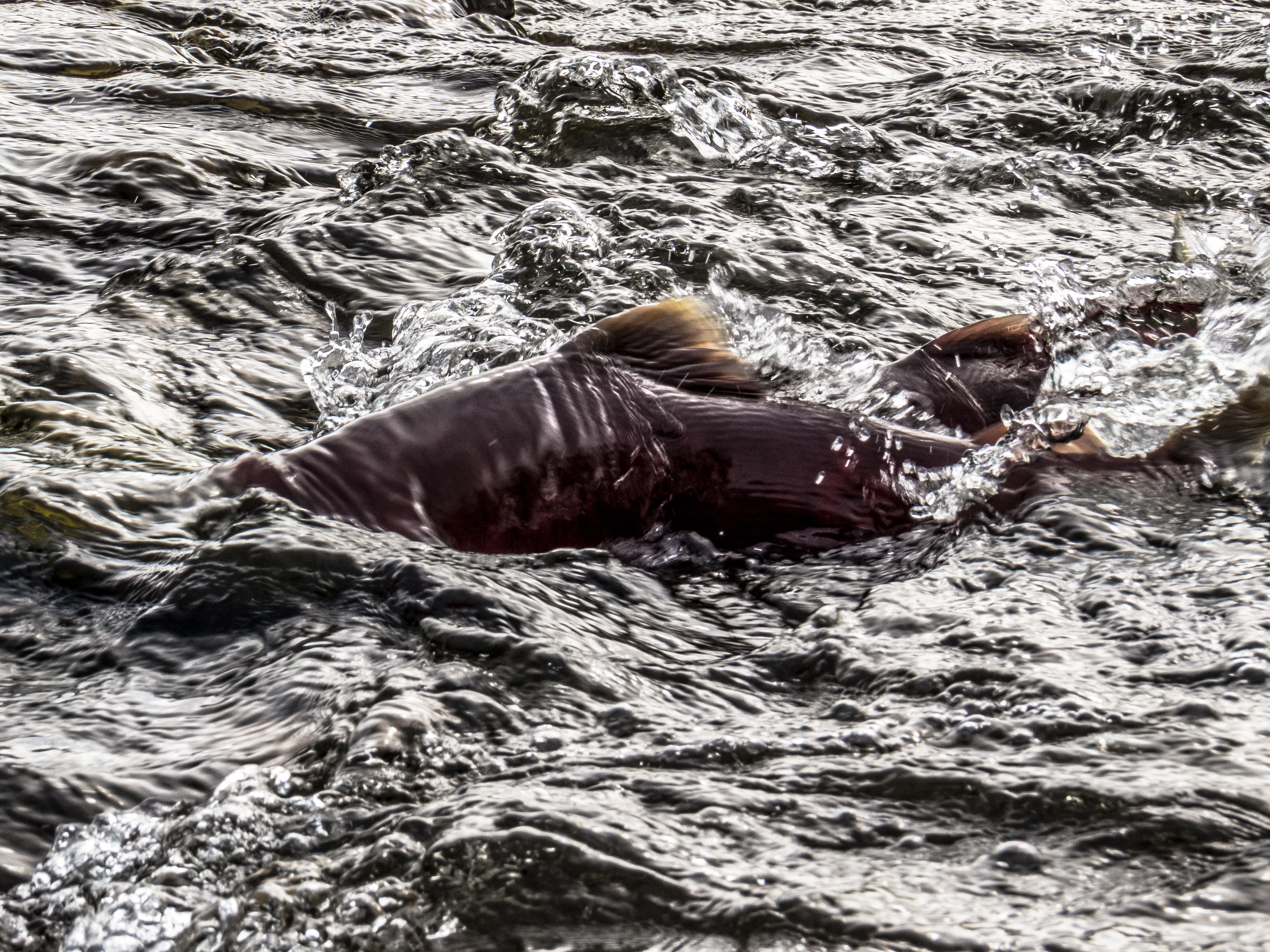
Salmon are the clearest example of climate pressure becoming daily operational pressure. Alaska’s salmon runs depend on cool, oxygen-rich water and a timing sequence that lines up with spawning and migration. When the water gets too warm or too shallow, the fish do not get a polite warning. They get physiological stress, migration delays, and in some years, mortality. USGS documented major mortality in 2019 during record heat and drought conditions, which is why I treat salmon climate talk as a live management problem instead of a future scenario.
If you want the practical breakdown, the key numbers are in the USGS paper Premature mortality observations among Alaska’s Pacific salmon during record heat and drought. It documents premature mortality during the 2019 heat and drought event and reports low migration success in 87% of rain-driven streams, 52% of snow-driven streams, and 18% of glacier-driven streams in the survey sample. That is the point: the climate signal has become a field-level management issue, not a future concern.
2. Caribou: routes that used to be reliable are becoming conditional
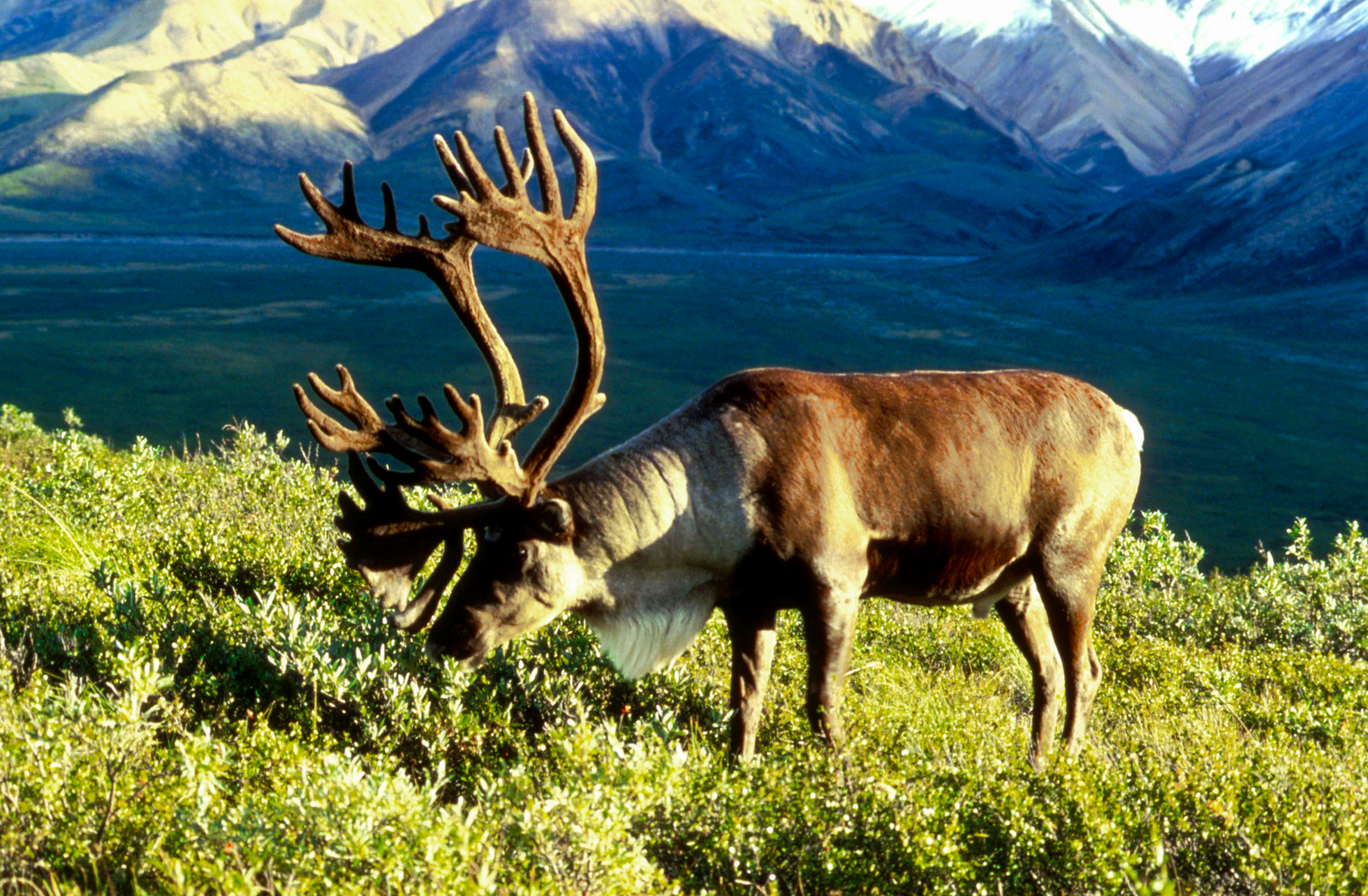
Caribou are built around movement, but movement is not the same thing as stability. The U.S. Fish and Wildlife Service maintains a map of Alaska’s 32 caribou herds, and the important phrase is buried in the description: herd distribution and migration can change from year to year depending on conditions and food availability. That is a polite way of saying the route is not guaranteed. Climate change matters here because snow depth, thaw timing, insect pressure, and plant growth all influence where the animals travel and how long they can stay in a given area.
For a quick reference, the FWS map of Alaska’s 32 caribou herds is useful because it shows the scale of the monitoring challenge. There are many herds, many calving grounds, and no simple rule that says the next year will look like the last.
3. Polar bears: less sea ice means more time on shore
Polar bears are the species most people think of when they hear “Arctic climate change,” and for once the public intuition is aligned with the field reality. The broader USGS Alaska overview explains why sea ice retreat matters to wildlife across the state, polar bears included. That means more time on shore, more exposure to human activity, and more conservation risk where bears and people overlap.
4. Seabirds: a marine heat wave can collapse the food base
Seabirds are easy to miss until the numbers get ugly. USGS documented a massive die-off of common murres in Alaska associated with the 2015-2016 marine heat wave, and later work estimated the largest seabird die-off ever recorded in the Pacific Ocean at roughly 0.5 to 1.2 million birds. Those are not small seasonal fluctuations. They are ecosystem alarms. When forage fish disappear or move, seabirds do not get to vote on the conditions. They simply fail at a scale that tells you the food web is out of balance.
The USGS seabird die-offs in Alaska page tracks that problem in a way that is worth reading if you care about the marine side of wildlife management.
5. McKay’s Bunting: a small range and a big warning
McKay’s Bunting is not a headline species in the way salmon or polar bears are, which is exactly why it matters. The bird breeds only on St. Matthew and Hall islands in the Bering Sea, and USGS reported a 38% population decline between 2003 and the later survey period, dropping from about 31,560 birds to 19,481. A restricted-range species is a good test case for climate stress because it has less room to move and fewer backup options. When the habitat changes, the margin for error disappears first.
The publication Rapid population decline in McKay’s Bunting is the cleanest source if you want the numbers straight from the research.
Conservation efforts and adaptations that are actually useful
This is the part where the article should stop sounding like a warning label and start sounding like an operating plan. Conservation in Alaska is not one tool. It is a stack of them.
Monitoring is the first line of defense
USGS, NOAA, the U.S. Fish and Wildlife Service, Alaska state agencies, and local researchers all contribute to the basic job of knowing what is happening. That sounds boring only until you realize that you cannot protect what you cannot count. Monitoring matters because it shows whether a change is temporary weather noise or a persistent trend. It also tells managers where to spend the next dollar, which is a much less glamorous sentence than it should be.
- Repeated population surveys help detect declines before they become irreversible.
- Stream temperature and flow monitoring helps identify where salmon are losing ground.
- Sea ice and shoreline monitoring helps polar bear and marine mammal planning stay current.
- Breeding habitat checks help managers understand whether birds like McKay’s Bunting still have usable nesting ground.
Local and Indigenous knowledge matters
In Alaska, conservation works better when it is not pretending the land is empty. Indigenous communities have watched seasonal patterns for generations, and that knowledge often catches what a satellite or one field season can miss. Wildlife management improves when the people who live with the consequences are part of the conversation.
Habitat protection is cheaper than rescue
Protecting cold-water refuges, nesting areas, calving grounds, and marine foraging zones is still the best long-term strategy. Rescue work is necessary. Preventive work is better. The future of conservation in Alaska is likely to depend on identifying those high-value habitats quickly and defending them before they become fragmented or unusable.
Thawing permafrost can alter more than water color. It can change habitat quality, chemistry, and biodiversity. That is the kind of domino effect that makes ecosystem management look simple from far away and complicated once you are standing in it.
Data work now matters almost as much as field work
Wildlife teams are collecting more camera data, more seasonal notes, more survey records, and more public updates than a few years ago. Someone still has to sort it, compare it, and decide what matters. For a small team trying to do that without building an endless spreadsheet shrine, neutral outside help such as AI consulting services can be a sensible way to decide whether automation helps with data intake, routing, or reporting. The point is not to automate judgment. The point is to keep judgment from drowning in admin.
What the future outlook really looks like
Forecasting wildlife in Alaska is a serious business because the future does not arrive evenly. Some species may benefit in one region and suffer in another. Some may move north or upslope. Others may hit a wall because their food web, nesting ground, or migration route has no obvious replacement.
That is why I do not trust simple stories about winners and losers. A warming climate creates both. The harder question is whether the conservation system can keep up with the speed of the change. Right now the answer is: only if the monitoring, habitat work, and public policy all move faster than they have historically. That is a high bar. It should be.
The future is not unknowable. It is just unevenly distributed, and Alaska tends to get the first draft.
What I would prioritize next
- Protect the most climate-sensitive habitat first. Cold-water refuges, migration corridors, nesting sites, and coastal areas where sea ice changes matter most.
- Keep monitoring species with narrow ranges and small populations. McKay’s Bunting is the obvious example, but it is not the only one.
- Use seasonal timing data more aggressively. If breakup, flow, or spawn timing shifts, the calendar has to shift with it.
- Make local knowledge part of the record. It is cheaper to listen early than to explain late why a pattern was missed.
- Build conservation planning around adaptation, not nostalgia. The old baseline is not coming back on schedule.
If you want more Alaska planning notes beyond this article, the blog collects related field and trip guidance. If you are turning environmental knowledge into a broader project plan, the services page is the place to see how this site organizes practical support. The two usually belong in the same conversation, even when people pretend they do not.
Conclusion
Climate change is already reshaping Alaska’s wildlife by changing the timing, geography, and reliability of the habitats animals depend on. Salmon are facing warmer water and tougher migration conditions. Caribou routes are becoming more conditional. Polar bears are spending more time on shore as sea ice retreats. Seabirds are showing how quickly a marine heat wave can cascade through a food web. A small range-restricted bird like McKay’s Bunting shows how fast risk can build when there is little room to move.
The practical response is not mystery meat policy. It is monitoring, habitat protection, Indigenous and local engagement, and faster adaptation of management plans. That is the work. Everything else is commentary with a graph attached.
- Climate change is shifting habitats and migration timing.
- Salmon, caribou, polar bears, seabirds, and McKay’s Bunting are all showing clear pressure points.
- Conservation works best when monitoring, habitat protection, and local knowledge move together.
- The future will reward teams that adapt sooner rather than later.
If you are building a trip plan, a conservation project, or just a better understanding of the state, keep reading the blog and use the services page when you need a more structured next step. Alaska does not reward delay. It charges interest.